Near Field Communications Handsets and Tags, NFC Pilots and Projects

PIN hack revealed on Google Wallet

Thursday, February 9, 2012

Web security provider Zvelo has uncovered a way crack the Google Wallet PIN security feature.

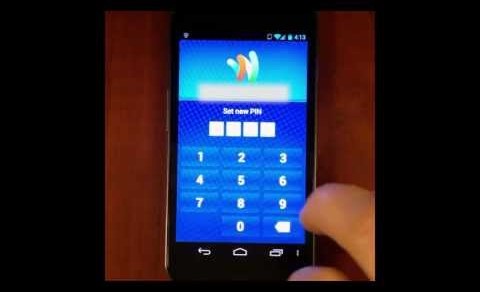
Using an app called “Wallet Cracker,” Zvelo was able to expose the PIN of a Google Wallet account without entering a single invalid attempt – five invalid attempts and the wallet locks out.


Check out the video for a demonstration:

So how did they do it?

“Within the PIN information section was a long integer ‘salt’ and a SHA256 hex encoded string ‘hash,’” Zvelo said in a release. “Knowing that the PIN can only be a 4-digit numeric value, it dawned on us that a brute-force attack would only require calculating, at most, 10,000 SHA256 hashes. This is trivial even on a platform as limited as a smart phone. Proving this hypothesis took little time.”

Zvelo says it has shared the discovery with Google, who confirmed the issue and agreed to “work quickly to resolve it.” In the meantime, Zvelo offers the following recommendations for Wallet users:

  1. Do Not “Root” the Cell Phone – Doing so will be one less step for a thief.

  2. Enable Lock Screens – Face Unlock, Pattern, PIN and Password all increase physical security to the device. Slide, however, does not.

  3. Disable USB Debugging – When enabled, the data on mobile devices can be accessed without first passing a lock screen challenge unless Full Disk Encryption is also enabled.

  4. Enable Full Disk Encryption – This will prevent even USB Debugging from bypassing the lock screen.

  5. Maintain Device Up-To-Date – Ensure the device is current with the latest official software. Unfortunately, users are largely at the behest of their carrier and cell phone manufacturer for this. Using only official software and keeping devices up-to-date is the best way to minimize vulnerabilities and increase security overall.
 [end] 

New Jersey Transit’s use of NFC payments with Google Wallet has been an “overwhelming and resounding success,” according to NJ Transit spokesman John Durson.

Introduced on the NJ Transit network in October 2011, Google Wallet enables riders to purchase tickets with the tap of an NFC-enabled phone at New York Penn Station, Newark Liberty Airport’s rail station and on 7 city bus lines.

read more »

Virgin Mobile has set a May 15 launch date for the LG Optimus Elite, the first device in the operator’s lineup to feature NFC and Google Wallet.

read more »

Mobile payments joint-venture Isis is taking the slow road to mobile wallet adoption, rather than going full steam ahead like rival Google Wallet, reports GigaOM.

read more »

Sprint has set an April 22 launch date for the Samsung Galaxy Nexus, the network’s first NFC-enabled Android 4.0 smart phone with 4G LTE capability.

read more »

bruno Permalink
February 10, 2012 9:56 AM

The PIN is stored in the app ??? Google is not aware there is a secure element in the phone ???

I just can't believe it !

Reply
Jay G Permalink
February 13, 2012 7:07 PM

I love the concept behind Google Wallet (http://www.google.com/wallet), because I believe that digital wallets, just like their physical equivalents, should allow their users to store in them all of the payment instruments they may want, including credit and debit cards issued by different banks and displaying different brand logos. And Google is doing precisely that. However, data security is much more important than either user-friendliness or convenience. In fact, your service should not be offered to consumers until you can guarantee that your system can protect their personal information. And that is clearly not the case with Google. Moreover, hacking Google Wallet is reported to be a "trivial" exercise, which makes me wonder whether Google even cares all that much about protecting its customers' information. I can only hope they will prove that they do. http://blog.unibulmerchantservices.com/app-cracks-your-google-wallet-pin-in-seconds

Reply
Comment on this article

Your full name and URL will be displayed with your comment.

Your email is not shown or shared, and is used only for your Gravatar image.


characters left.